Tubing
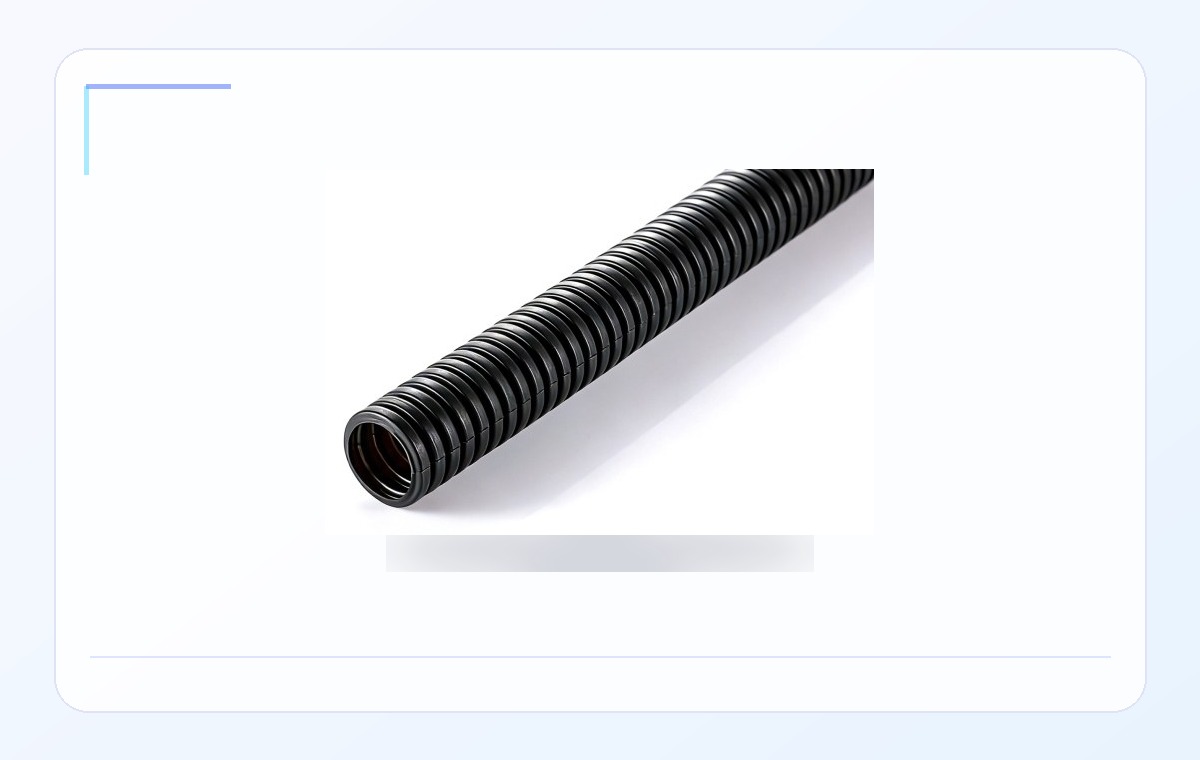
Flexible Corrugated Tubing
Flexible routed protection for wire harnesses in vehicles, equipment cabinets and moving assemblies.
Tubing
Flexible Corrugated Tubing
Flexible corrugated tubing for wire harness protection, abrasion resistance and organized routing in vehicles, cabinets, equipment frames and moving assemblies.
 Tubing
Typical Parameters
| Parameter | Typical value |
|---|
| Material | PP / PE / PA |
|---|
| Working temperature | Application dependent |
|---|
| Voltage / dielectric | Mechanical protection |
|---|
| Size range | AD9.0-AD80; ID 6.0-66.5 mm, OD 9.0-80.0 mm |
|---|
| Structure | Flexible corrugated tubing, split or non-split |
|---|
OEM note: Detailed size table, validation data and custom packing can be confirmed by project.
Why this product
- Built for wire harness protection where abrasion, branch routing and service access are key concerns.
- Supports OEM cable management in automotive, industrial, cabinet and equipment wiring layouts.
- Can be matched with split or non-split structures for installation speed and maintenance access.
Typical applications
- Automotive and EV wire harness protection
- Equipment cabinet wiring, robots and moving cable assemblies
- Appliance, industrial machine and aftermarket harness-routing projects
Frequently Asked Questions
Frequently Asked Questions
What is Flexible Corrugated Tubing used for?
Flexible Corrugated Tubing is used for routing, insulation, protection or fluid-related assemblies when its material and structure fit the operating environment.
How should engineering select Flexible Corrugated Tubing?
Review media exposure, temperature, bend radius, wall thickness, installation space, movement and the final validation method before confirming a grade.
What information should I provide for tubing samples?
Provide size range, protected part or routed media, temperature, environment, required length, color, packing and document requirements.
What makes flexible corrugated tubing different from standard corrugated tubing?
Flexible corrugated tubing has a modified corrugation profile that allows the tube to bend around corners and follow curved routing paths without kinking, while still providing mechanical and abrasion protection. Standard corrugated tubing is more rigid and suited for straight runs. Both are typically made from PA or PP.
When should I choose flexible corrugated tubing over braided sleeving?
Choose flexible corrugated tubing when rigid mechanical protection against impact, crushing and abrasion is the priority, especially along curved paths. Choose braided sleeving (PET or fiberglass) when flexibility, lighter weight and expandability are more important than rigid impact protection.
What applications use flexible corrugated tubing?
Flexible corrugated tubing is used in automotive engine compartments, chassis harness routing, industrial machinery with moving parts, robotics and any application where harnesses follow curved paths and need mechanical protection against abrasion and impact.