Harness
Corrugated Tubing
Mechanical impact and abrasion protection for harness routing.
Harness
Corrugated Tubing
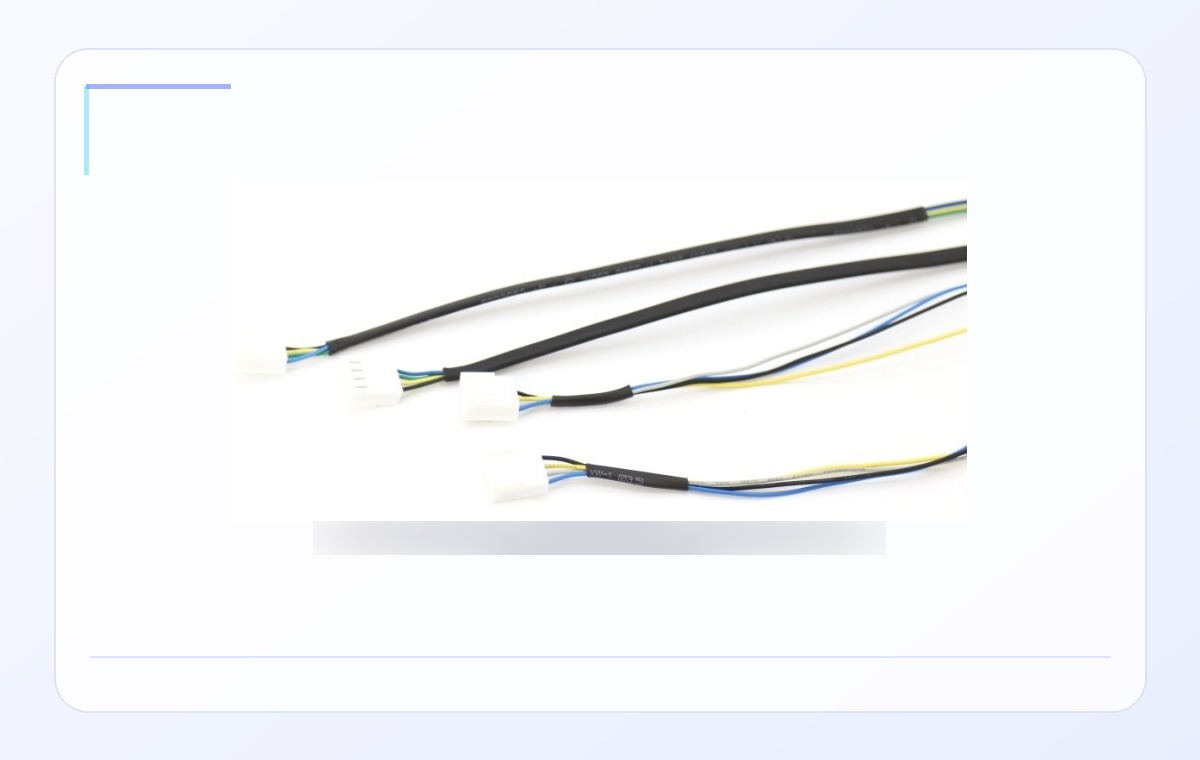
Corrugated tubing for mechanical wire harness protection, abrasion resistance and routed cable management in demanding equipment layouts.
 Harness
Typical Parameters
| Parameter | Typical value |
|---|
| Material | PP / PE / PA |
|---|
| Working temperature | Application dependent |
|---|
| Voltage / dielectric | Mechanical protection |
|---|
| Size range | AD9.0-AD80 corrugated tube series |
|---|
| Structure | Corrugated protective tube, split or non-split style |
|---|
OEM note: Detailed size table, validation data and custom packing can be confirmed by project.
Why this product
- Works well for corrugated tubing projects that prioritize impact resistance and abrasion control.
- Supports harness routing in vehicles, cabinets, industrial equipment and service-access layouts.
- Available for OEM projects that need split or non-split structures and repeatable installation quality.
Typical applications
- Automotive, EV and aftermarket harness routing
- Control cabinet, robot and machine cable protection
- Appliance and industrial wiring assemblies with abrasion risk
Frequently Asked Questions
Frequently Asked Questions
What is corrugated tubing used for?
Corrugated tubing protects routed wires and harness bundles from mechanical impact, abrasion and routing damage in vehicles, equipment cabinets and industrial assemblies.
How do I choose corrugated tubing for a harness?
Confirm bundle diameter, bend radius, split or closed structure, temperature, abrasion level, installation path, fixing method and required document support.
When should I use flexible corrugated tubing?
Flexible corrugated tubing is useful when the harness route includes movement, tight routing or assembly constraints that need easier handling.
What is corrugated tubing used for in wire harness protection?
Corrugated tubing provides rigid mechanical protection for wire harnesses in straight runs, protecting against abrasion, impact and crushing. It is commonly made from PA (nylon) or PP (polypropylene) and used in automotive, industrial equipment and machinery where harnesses follow fixed routing paths.
What is the difference between corrugated tubing and flexible corrugated tubing?
Standard corrugated tubing provides rigid protection for straight runs with limited movement. Flexible corrugated tubing has a modified corrugation structure that allows bending around corners and curved routing paths while still providing mechanical protection. Choose standard for straight conduits; choose flexible for curved or moving paths.
Is corrugated tubing primary electrical insulation?
Corrugated tubing is primarily mechanical protection, not primary electrical insulation. For dielectric insulation, use silicone fiberglass sleeving, heat shrink tubing or PVC insulating tubing with the appropriate voltage rating. Corrugated tubing is often used as an outer protective conduit over individual insulated wires.